

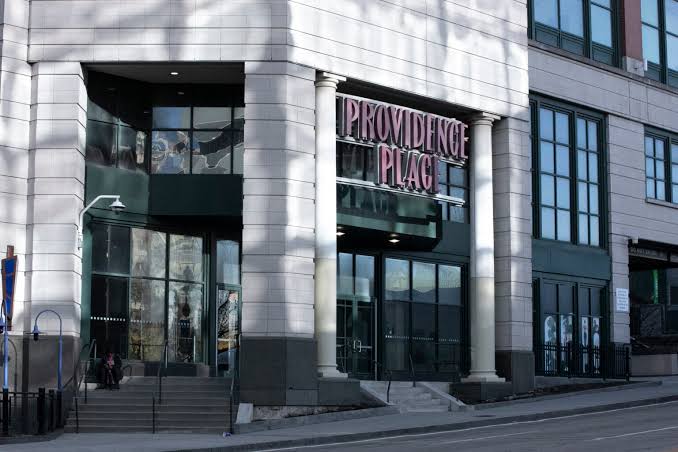
Providence Place Mall sale marks a major change in ownership for one of Rhode Island’s best-known retail properties, with a partnership involving Pyramid Management Group, Paolino Properties and DW Partners completing a reported $133 million purchase. The Providence Place Mall sale brings the downtown Providence shopping center out of a prolonged period of financial uncertainty and receivership, placing the 1.4 million-square-foot property under new ownership with plans for continued repositioning.
The Providence Place Mall sale was completed in August 2026 after the property spent nearly two years under court-appointed control following financial distress involving its previous ownership. Rhode Island Current reported that the transaction closed on August 19, with the new owners announcing the completed purchase the following day. The Providence Place Mall sale represents a notable retail transaction at a time when investors and operators are reassessing the role of large shopping centers in changing consumer and tenant environments.
The Providence Place Mall sale follows a receivership process that began after Brookfield Properties defaulted on debt associated with the property. Published reports indicate that the mall had faced financial pressure, vacancies and uncertainty over its future before the transaction was finalized. The ownership transition provides a new platform for the partners to pursue operational improvements, leasing initiatives and repositioning. The Providence Place Mall sale gives the group an opportunity to apply its combined operating and local-market experience.
For the Providence Place Mall sale, the $133 million purchase price is particularly significant when viewed against the property’s previous financial obligations and valuation history. Earlier reports noted a substantially larger debt balance associated with the mall, underscoring the pricing reset that has occurred across some challenged retail properties. The final purchase price does not by itself establish the future value of the asset, as performance will depend on occupancy, tenant demand, capital investment and operating execution.
The Providence Place Mall sale may be especially notable because Pyramid has a historical connection to the property. The company was involved with the mall’s original development, making the return to ownership a full-circle development for its leadership. Paolino Properties also has deep ties to Providence and the surrounding downtown real estate market, potentially giving the ownership group a strong local perspective as it evaluates the asset’s future.
The Providence Place Mall sale comes as regional malls across the United States continue to experience divergent outcomes. Some properties face declining traffic, vacancies and debt challenges, while others are being repositioned around dining, entertainment, experiential uses and stronger retail mixes. Providence Place remains a large, centrally located asset, making its redevelopment strategy relevant to the broader discussion about the future of enclosed shopping centers.
The Providence Place Mall sale also highlights the potential importance of operational expertise when distressed retail properties change hands. New ownership has stated that improvements to security and the parking experience are priorities, while the property’s existing tenant base provides a foundation for future leasing efforts. The mall was reported to be about 80% occupied at the time of the ownership announcement.
For Providence, the Providence Place Mall sale could influence the trajectory of a prominent downtown property and its surrounding commercial environment. Any successful repositioning could help strengthen tenant confidence, visitor activity and the mall’s role within the city’s retail ecosystem. At the same time, the property faces the same broader challenges confronting many large shopping centers, including evolving consumer preferences, operating expenses and competition from alternative retail formats.
The Providence Place Mall sale should therefore be viewed as both a property-specific transaction and a broader example of capital seeking opportunities in challenged commercial real estate. The new ownership’s ability to execute its plans, maintain occupancy and invest in the physical property will be important factors in determining the mall’s next phase.
This article is based on publicly available information believed to be reliable at the time of publication. ePropertyNews does not independently verify all statements, makes no representations or warranties regarding their accuracy or completeness, and disclaims all liability for any loss or damage arising from the use of or reliance on this content. Investors remain attentive.