

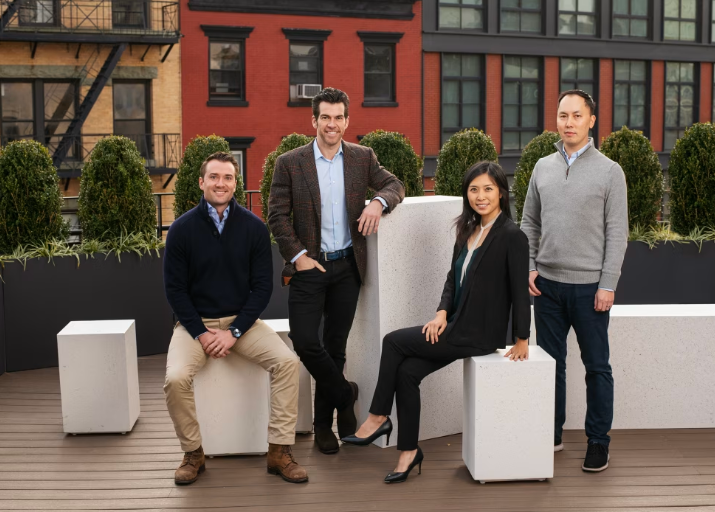
Brendan Wallace, CEO, CIO and co-founder of Fifth Wall, believes the future of real estate extends well beyond buildings, offices and residential developments. Speaking about the evolution of proptech investing, Wallace argues that many of tomorrow’s most valuable real estate asset classes will emerge from technology companies that fundamentally reshape how physical space is used. His perspective reflects a growing trend where technology and real estate are becoming increasingly interconnected, creating new investment opportunities that traditional property markets have often overlooked.
Since launching Fifth Wall in 2016, the venture capital firm has focused on backing companies that influence the built environment, even if they are not traditionally recognised as real estate companies. One of the firm’s most notable investments is Lime, the shared electric mobility platform. While many investors viewed Lime as a transportation business, Wallace saw something entirely different. He believed the company’s true value was not the scooters themselves but the highly valuable curb space and municipal concessions that enable its operations across major cities.
When Fifth Wall invested in Lime in 2018, the company generated approximately $2 million in annual revenue. Today, it operates in more than 230 cities across 30 countries, has completed over one billion rides and has grown into one of the world’s largest micro-mobility platforms. Wallace believes this success validates Fifth Wall’s original investment thesis that controlling strategic urban space is ultimately more valuable than owning the vehicles that occupy it. In his view, curb space has become one of the most important forms of urban real estate because it directly influences mobility, accessibility and economic activity.
Wallace argues that the traditional definition of real estate should be expanded. Rather than limiting the sector to land and buildings, he describes real estate as the use of physical space as an economic input. Under this broader interpretation, data centres, logistics hubs, parking facilities, battery storage, microgrids, edge computing infrastructure and transportation networks all become part of the evolving real estate ecosystem. This philosophy has become the foundation of Fifth Wall’s investment strategy, which seeks companies transforming how physical space is utilised through technological innovation and changing consumer behaviour.
Looking ahead, Wallace expects artificial intelligence (AI) to accelerate the creation of entirely new real estate asset classes. He believes AI, autonomous vehicles, edge data centres, last-mile logistics facilities and distributed energy infrastructure will redefine how cities operate and how investors evaluate property-related opportunities. Many of these businesses initially appear to be technology startups, but over time they evolve into owners or operators of valuable physical infrastructure, making them increasingly similar to traditional real estate businesses.
Wallace also challenges one of venture capital’s long-standing assumptions that capital-intensive businesses are less attractive investments. According to him, Fifth Wall’s strongest investment returns have consistently come from companies requiring significant physical assets and infrastructure, including Lime, Opendoor and Industrious. These investments demonstrate that capital intensity can become a competitive advantage rather than a weakness when supported by valuable real estate and long-term infrastructure ownership.
Another major trend Wallace highlights is the growing convergence of technology and real estate. He believes the distinction between technology companies and real estate companies is becoming increasingly blurred as digital businesses rely more heavily on physical infrastructure to deliver their services. Companies that begin as software platforms frequently evolve into operators of strategic physical assets, fundamentally changing how investors assess value within the proptech sector.
Artificial intelligence is further accelerating this transformation by driving faster changes in consumer behaviour and urban infrastructure. Wallace believes investors should pay close attention to emerging patterns in how people interact with physical space rather than focusing solely on existing property categories. Just as data centres and cell towers eventually became recognised as established real estate asset classes, he expects AI-driven infrastructure and next-generation mobility platforms to follow a similar path over the coming years.
As technology continues to reshape cities, transportation and infrastructure, Wallace believes the most significant opportunities in real estate will come from businesses that successfully combine digital innovation with strategic control of physical space. For Fifth Wall, the future of proptech lies not only in smarter buildings but also in identifying the next generation of real estate asset classes that will define how people live, work and move in an increasingly technology-driven world.